

The State of Aviation 2025
Can the aviation industry soar to new heights, or will headwinds slow its progress?
The aviation industry is enjoying a welcome boost from resurgent postpandemic air travel demand. But there remain potential storms to navigate. This report analyzes the industry’s current trajectory while pointing toward possible future landing spots.
How might economic trends and geopolitical events shape aviation? What product offerings are most likely to find favor with air travelers? How can airlines adjust their business models, plan their schedules, and calibrate their fleets in ways that achieve their commercial and operational goals?
During a moment that combines great promise with great uncertainty, it’s crucial for aviation stakeholders to ground their decisions in solid facts, careful analysis, and hard-earned insights.






Can the global airline industry continue its climb?
After some turbulent years, the airline sector is on a recent upswing. In 2023 and 2024, nearly half the airlines we track created positive economic value, and the sector as a whole came close to earning its cost of capital. But the industry remains fragile—vulnerable to economic uncertainty, geopolitical tensions, and potential imbalances between capacity and demand.
Future profitability will depend on airlines’ ability to navigate external pressures while sharpening internal performance. Improving on-time reliability, ancillary revenue generation, and organizational health could be avenues for airlines to create stronger returns.
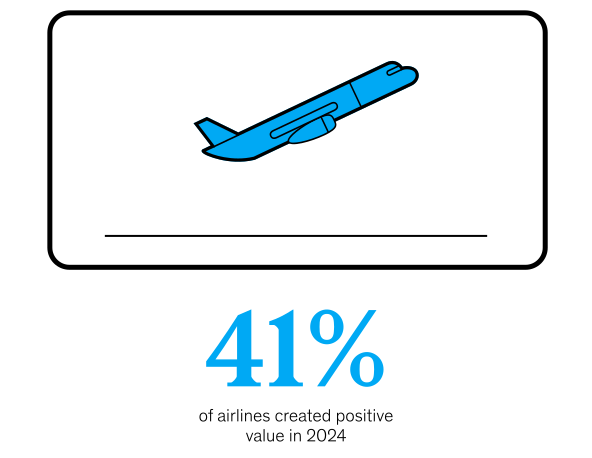
41 percent of airlines created positive economic value in 2024.
Are low-cost airlines losing altitude?
In North America, discount carriers have experienced a postpandemic decline in profitability and growth. This slowdown can be attributed in part to rising labor costs, a spending gap between higher- and lower-income travelers, and a wave of more budget-friendly offerings from competing full-service airlines.
Vigilant cost control, strong value propositions, and an understanding of the fluidity of customer segments could help low-cost airlines catch a second wind. Meanwhile, airlines of all types—all over the globe—can eye this trend and consider its implications for their own businesses.
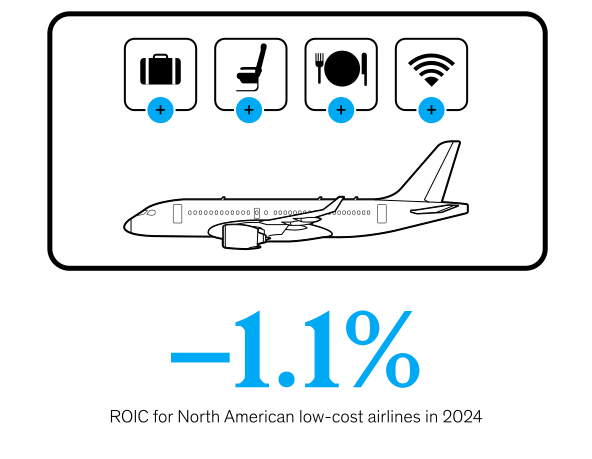
-1.1 percent ROIC for North American low-cost airlines in 2024.

The eight myths of airline retailing
Overcoming some common misconceptions could help the airline sector boost its retailing efforts. A new survey of air traveler preferences helps identify what consumers really want. Beyond price, travelers strongly value easier booking processes and trustworthy brands.
Personal recommendations from friends and family can wield more influence than social media. Many travelers spend significant time researching before booking. And while direct bookings are on the rise, intermediaries remain important. To capture more value, airlines can adopt multichannel strategies, enhance their merchandising, and provide travelers with personalized, practical support.
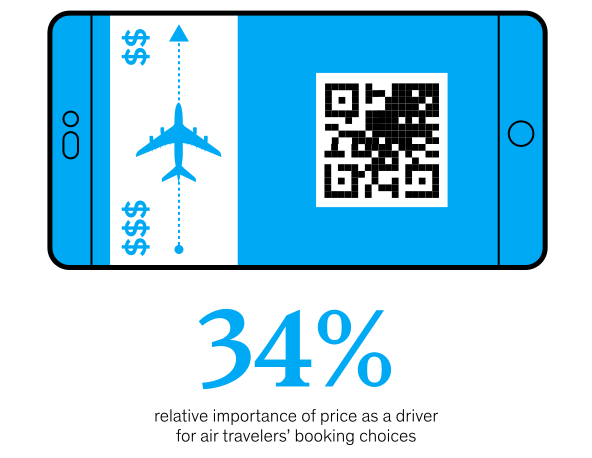
34 percent relative importance of price as a driver for air travelers' booking choices.

How to modernize airline planning
Airline planning—which involves scheduling every aspect of flights and all the components that support them—has always been challenging, given the unpredictability of inputs such as passenger demand, crew availability, and weather. But airlines face an opportunity to improve their planning processes by updating their technology, methods, and mindsets.
Better planning tools might more fully mesh commercial and operational considerations. Airlines could prioritize customer experience over scheduling constraints. Flights could be planned days, not months, in advance. The potential rewards stemming from truly integrated planning are considerable.
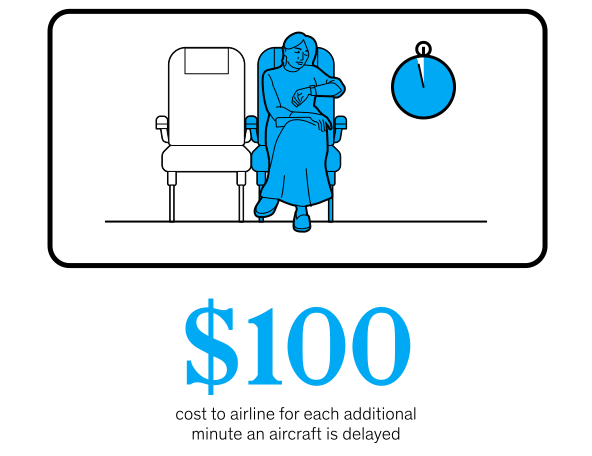
$100 cost to airline for each additional minute an aircraft is delayed.

How severe is the aircraft shortage—and what happens next?
Rising passenger demand for air travel is meeting with a constrained supply of new aircraft. While passenger demand has rebounded from pandemic-era lows and is projected to keep growing, delivery times for newly manufactured aircraft—and maintenance turnaround times for planes in existing fleets—have slowed.
The resulting divergence between demand and supply is creating a concerning mismatch. How big is this gap? Is it poised to grow or shrink? What actions can industry stakeholders take to help level the imbalance and achieve equilibrium?
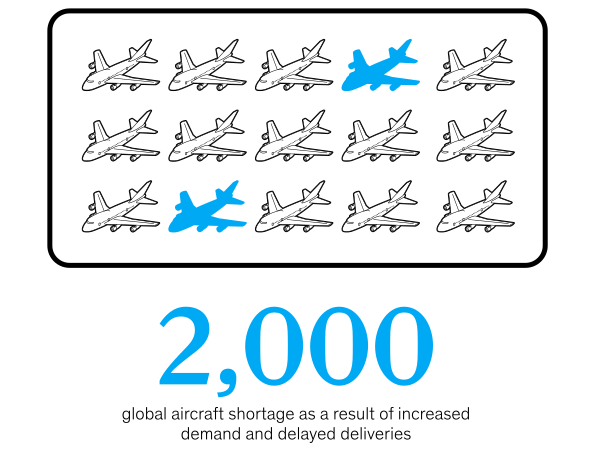
2,000 global aircraft shortage as a result of increased demand and delayed deliveries.
Connect with our Travel Practice
Partner with our aviation and travel experts to unlock profitable growth, optimize fleet operations, and build resilient strategies.
ACKNOWLEDGMENTS
In addition to the authors of these articles, several GSI Global Publishing contributors collaborated to produce this report, including Jonathon Rivait, Kanika Punwani, Katie Shearer, Nathan Wilson, Philip Mathew, Seth Stevenson, and Victor Cuevas.
Ask GSI AI
The State of Aviation 2025 Intelligence
Contact & Report Download
Required fields are marked with an asterisk (*)